
Japan’s Big-Time Grocery Mergers, and Why Warren Buffett’s Bets Aren’t Going Anywhere
Despite National Mergers, Japan Runs Through the Same Gatekeepers
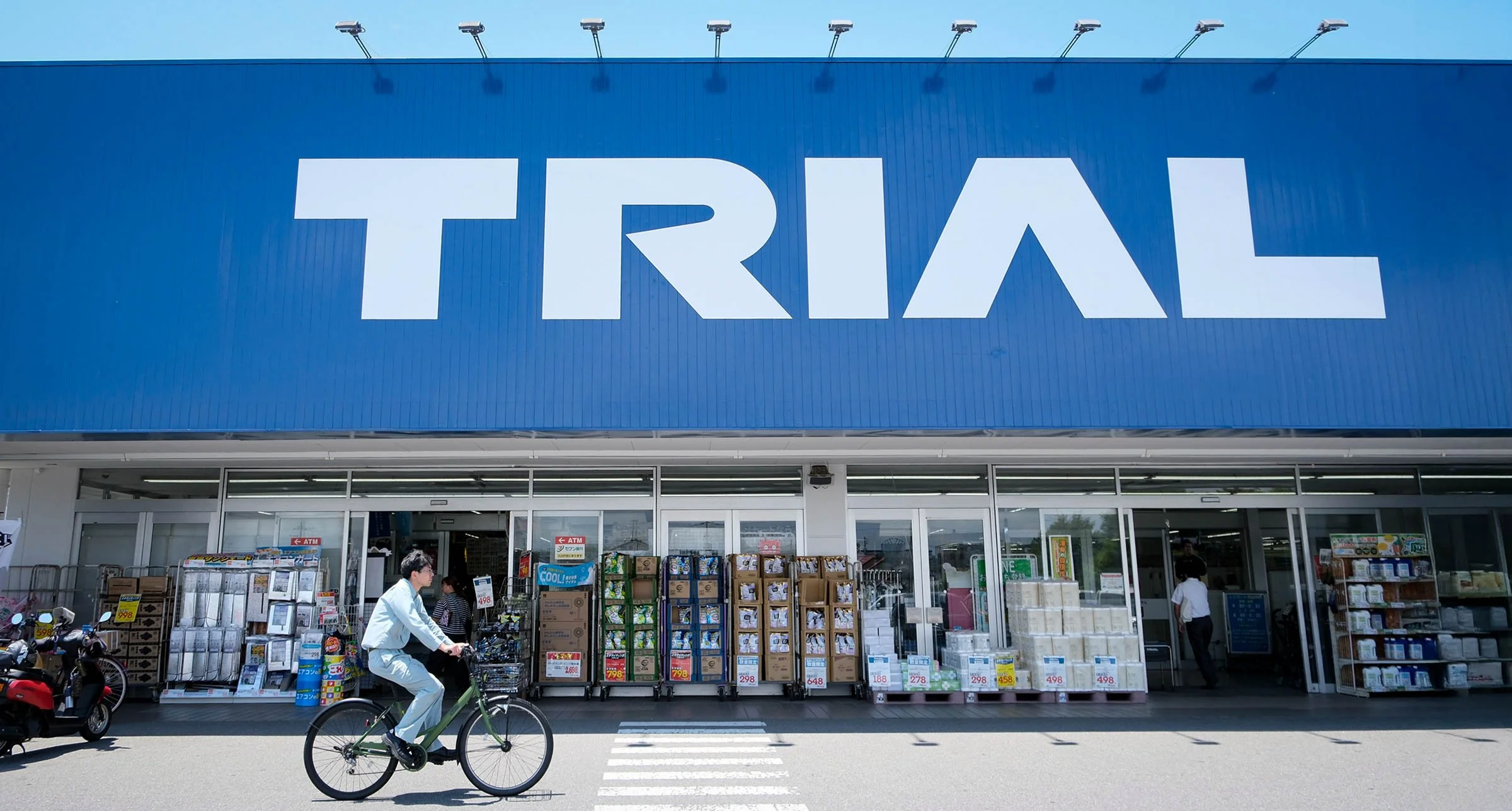
Open the trade press in Japan this year, and the headlines all point towards one theme. AEON is folding in regional supermarket chains. Trial, the Kyushu-born discounter, is expanding into the Tokyo metropolitan area through its acquisition of Seiyu. OK Stores, long a Kanto-only phenomenon, is expanding its low-price model in Osaka. And Pan Pacific International, the parent of Don Quijote, is launching an entirely new discount grocery banner called Robin Hood, with a stated target of 300 locations by 2035.
To an executive watching from outside Japan, the signs are obvious. The market is consolidating. For decision-makers wary of Japan’s fragmented market, you might be wondering - does this mean it’s finally the right time to go to Japan? The answer is yes… at least partially. Consolidation is real, and it’s accelerating. But Japan’s consolidation trend doesn’t mean exporting will get any easier. In fact, anticipating ease of exporting continues to be one of the more expensive mistakes a foreign manufacturer can make in this market.
The forces behind these consolidation headlines are worth naming. The yen has depreciated more than 50 percent against the dollar since early 2021, trading above the ¥150–160 range through 2025 and into 2026, pushing import costs sharply higher across the board. Japan’s population is aging quickly. The median age is now over 50. This population is further from their peak earning years, with price being a top decision-making criteria. Layer onto that the relentless expansion of discounters such as Lopia (having grown to 137 branches while opening 30 or more new stores a year), plus OK Store’s westward push… the pressure on weaker regional operators to sell, merge, or shut down becomes easy to understand. Consolidation, in that sense, is simply the market sorting itself. It’s the signal of who can survive on thinner margins.
Consolidation Doesn’t Mean Easier/Quicker Access
Here is where foreign manufacturers need to slow down. Corporate-level consolidation in Japan does not translate into buying-level simplification, or at least not in the way an executive from the UK, France, Germany, Australia, or Canada might expect.
Start with the structure itself. In the UK, the top four or five grocery chains control somewhere in the range of 65 to 70 percent of the market. In Japan, the top five players hold something closer to 30 percent. Then there remain an estimated 500 to 800 registered grocery companies still operating. A handful of high-profile mergers will not collapse a market with that much diversity overnight.
Even within a single consolidated group, the practical reality on the ground is more complicated than the press release suggests. AEON is the clearest example. It’s a company that has absorbed many regional chains under one banner. Yet it still operates largely separate buying organizations, supplier lists, and terms of trade across many of those banners. A relationship with one part of the AEON groups does not automatically extend to another. Japan integrates at its own pace. This is a pace measured years at a time... not “quarterly” as a Westerner might assume.
Additionally, it’s common for the founders of acquired companies to retain some level of “veto power” until the day they die. This is one more reason why merger news turns heads, but it is less likely to result in a change to operations.
There is further reason this buying complexity persists, and it has less to do with how Japanese retailers behave than with the market context.
Wholesalers Aren’t Going Anywhere. Even Warren Buffet Put Money on It.
Over the past several years, Warren Buffett and Berkshire Hathaway have built stakes now above 10 percent in each of Japan’s five major sogo shosha trading houses - Mitsubishi Corporation, Mitsui & Co., Itochu, Marubeni, and Sumitomo Corporation. That commitment is now worth more than $23 billion, making it Berkshire’s largest geographic bet outside the United States. Buffett and his designated successor, Greg Abel, said Berkshire “won’t give a thought to selling” their positions for the next 50 years. Think about it. It is a wager that these large wholesalers will continue to have outsized influence in the grocery and food-buying sector.
That bet is especially clear when it comes to grocery. When Seven & i Holdings (parent of 7-Eleven), became the target of a takeover bid from Canada’s Alimentation Couche-Tard in 2024, the founding Ito family explored a roughly $58 billion management buyout to keep the company independent. Trading company, Itochu Corporation, was prepared to commit approximately ¥1 trillion (~$6.7 billion) toward that buyout. The deal ultimately collapsed in February 2025 when the Ito family could not secure full financing. Itochu withdrew from the effort. But the willingness to put that much capital behind defending a single retailer, deal or no deal, says a great deal about how embedded these trading houses already are in Japan’s food and retail landscape.
Meanwhile, among the wholesalers themselves, competition is intensifying rather than easing. As ownership structures shift through M&A, each major distributor is working harder to ensure its services remain indispensable to the retailers it serves. Wholesaler and trading firms are positioning themselves to remain at the center of retail culture, regardless of how the retail map above them is redrawn.
The “Going National” Fallacy
No discussion of foreign manufacturers in Japan is complete without addressing what might be called the Spam Fallacy! Spam, Tabasco, Maggi, Heinz, and others, are brands that are genuinely ubiquitous in Japan today, sold in convenience stores and supermarkets nationwide. It is tempting to look at that ubiquity and think that the path is straightforward: build a good product, find the right partners, and national distribution follows. Spam musubi and ketchup omurice are exactly the kind of cultural adoption that makes exporters salivate.
But the ubiquity of these brand names should not be mistaken for any kind of streamlining capacity behind the scenes.
What is generally misunderstood about these brand stories domestically is time. Each of those brands achieved its current shelf presence over decades, not years. It took a sustained investment in distributor relationships, dedicated salesforce development, packaging localization, and consumer education that often unfolded over 20 to 40 years. Assuming that the timeline can be compressed into two or three years is among the most common, and most costly, miscalculations a foreign manufacturer can make entering this market. I’ve seen some companies attempt to launch in Japan and expect major returns in three years, only to pull out, disappointed and confused, wasting the time and money it took to get started. If there is one constant to expect here, it’s to get ready for a long game.
True national distribution in Japan still requires partnership with major wholesale operators like Itochu, Mitsubishi Shokuhin, or others. These networks carry the relationships, the logistics infrastructure, and the salesforce reach. A single manufacturer, however well-funded, cannot replicate this on its own. Accessing and activating that network requires sustained, in-market effort that exceeds what most foreign manufacturers are accustomed to committing, even at home. And given the continued fragmentation of operational territories, that reality is not softening. If anything, the trading houses sitting behind these wholesalers are doubling down.
Japan’s Grocery Map is Changing, but the Underlying Structures Remain Unchanged
High-dollar M&A deals may be turning heads for international executives, but the truth is that the ingrained, fragmented nature of Japanese wholesaler culture isn’t going away. Wholesaler partnerships remain non-negotiable for anyone seeking real scale in Japan. Salesforce and relationship investment continue to be a heavy lift. And the firms sitting at the center of the wholesale layer are, if anything, more entrenched today than they were even just five years ago.
I’ve spent over 18 years navigating Japan's market on the ground - first inside global CPG, then on my own. I led packaged goods for Starbucks in Japan, held a senior role at Nestlé, and drove HARIBO from a fringe player to the #1 gummy brand in Japan. Now with JapanIQ, we are putting that experience to work for other companies, advising clients that range from global food brands to small challengers, government delegations to full in-market representation. The common thread: Japan rewards preparation and local fluency, not improvisation. Companies running into friction here, feel free to reach out.
Paul J. Kraft